
Algorithmic Overlap and the Mindshare Index
An exercise in mapping the digital ecosystem of ideas

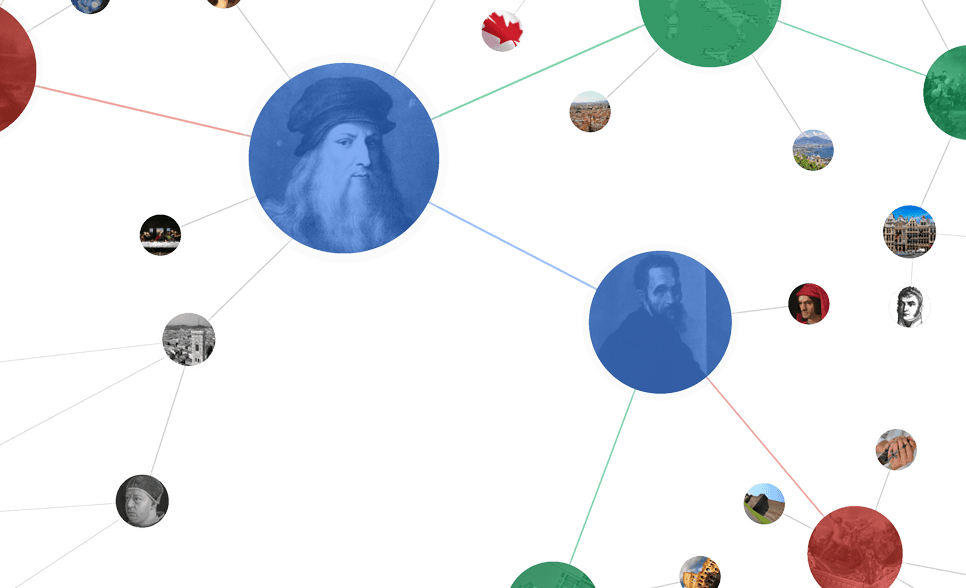
Ever found yourself deep in #SchizoTok after starting your doomscroll with Stand-Up comedy clips or GRWM videos? Maybe I’ve just “curated” an eclectic feed but happens to me all the time. Algorithmic content propagation is the primary vehicle for most media, shaped by complex recommendation systems that might know you better than you know yourself. The algorithm is a hell of a drug.
In fact, most content discovery online is primarily propagated via recommendation algorithms. Most of what we see is from people we don’t follow. Especially on scroll-style social media like Reels or TikTok. According to a Arvind Narayanan, a leading researcher on recommendation algorithms, TikTok alone collects somewhere to the order of a quadrillion behavioral records of its users.
These digital pushers create temporary, overlapping subcultures - algorithmic neighborhoods where different ideas and trends intersect. Your journey from stand-up clips to conspiracy theories isn't random; it's a calculated exploration of your conscious and unconscious scrolling behavior. Across the network, it creates a dynamic map of interconnected ideas, showing how concepts and trends are related based on our engagement patterns.
The new context for content consumption, is one of passive curation that reflects overlapping user behaviors and interests. This algorithmically driven content discovery isn't just shaping your personal feed - it's creating a living, breathing ecosystem of ideas.
Let’s try to visualize this.
A Relational Knowledge Graph of IdeasThe Mindshare Index, in theory, aims to lay out this entire landscape of ideas, showing how they're all interconnected. Every meme, trend, or idea that propagates online is like a point in a vast, multidimensional space, with varying degrees of similarity and overlap.
Consider a Donald Trump meme. It's not just about Trump - it's also partially a USA meme, partially a capitalism meme, partially an anti-woke meme, and so on. Or take the concept of "Brainrot," a constellation of related ideas including "Rizz," "Gyatt," "Skibidi Toilet," "Edging," and "Gooning." Each is its own meme, but collectively they form a larger index under the Brainrot umbrella.
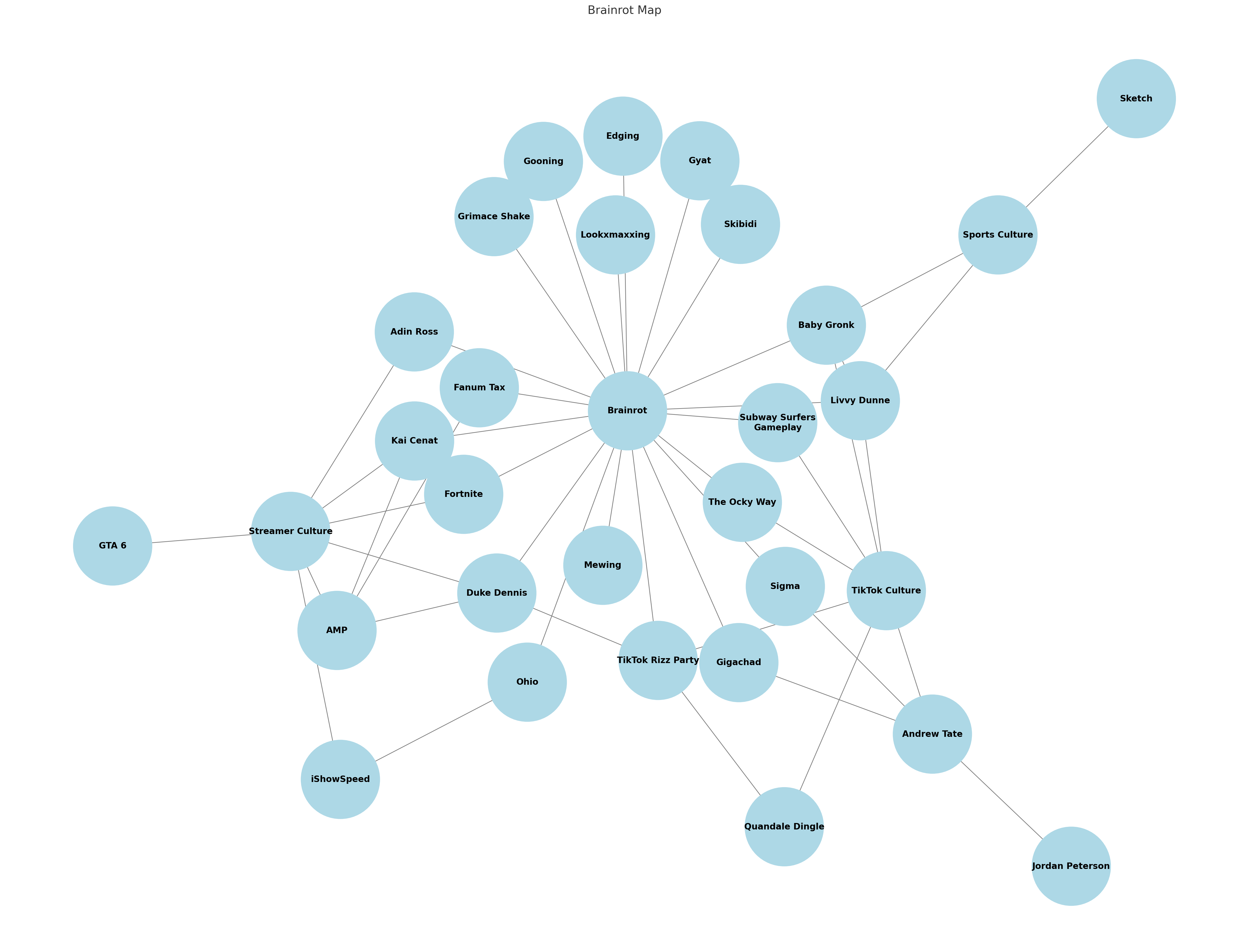
This web forms a knowledge graph, where each node represents an idea, and the connections between nodes represent their relationships and similarities. The Rogan index connects to the Shane Gillis Index, connects to the Trump Index, connects to the Barron Trump Index, connect to the Dune Index, and so on. It's sort of a map of the meme multiverse.
The Indexer: How it WorksThe sheer volume of content on social media platforms is staggering. We’re talking billions of posts, millions of interactions per users. All updated and optimized in real time. Reading and classifying the entire internet is impossible, but here's the kicker: we don't need to. The algorithmic experience is largely shared, with most engagement coming from a small pool of posts and ideas in short time cycles.
The Mindshare Index proposes that instead of focusing on creators, we analyze the content and ideas themselves. Why? Because ideas evolve, remix, and transcend individual creators who are simply vessels for the ideas being shared. Each index in this hypothetical system holds ideas with varying degrees of similarity and connections to other overlapping indices.
Here's a high-level overview of how it might work:
Data Tagging: AI algorithms classify and tag data from various platforms, extracting metadata like keywords, sentiments, and themes.
Relational Mapping: A relational map visualizing connections between ideas, forming ecosystems of meme classifications.
Engagement Tracking: This monitors user interactions, crucial for understanding content performance.
Weighted Indexing: Score and weight memes based on engagement metrics, creating a dynamic representation of internet culture and mindshare.
Engagement is calculated as a weighted average that accounts for content similarity and other factors. This approach allows us to capture the nuanced relationships between ideas and their cultural impact.
Recent advances in AI have made this classification possible at scale. We're no longer limited to keywords and demographic analysis. These models can understand video content - the primary medium for memes today - breaking down visual, audio, and textual components to grasp the full context of an idea.
The result? A knowledge graph that categorizes ideas by their content and relationships, weighted to reflect their current cultural impact and reach.
It’s important to note that this model underrates sentiment. The 9/11 index, for example, might hold a lot of mindshare consistently in a way that doesn’t represent people’s conviction in the event or idea. The point is that mindshare alone, can tell us a lot about the spread of idea viruses and its reflection on the shared internet mind.
Meta-Participation in Ideas on the InternetThe Mindshare Index isn't just a fancy map - it's a gateway to a new form of internet engagement. At its core, it's an approximation of attention-liquidity, which is theoretically finite. This opens exciting possibilities.
Imagine a marketplace for ideas where you can quantify and compare the impact of memes, trends, and cultural phenomena in ways we've never been able to before. This approach could allow us to understand the flow and impact of ideas at an unprecedented scale.
Comments could even become their own derivative, based on the sub-memes they spawn. As we noted in our previous article the comment section often becomes a breeding ground for new and related ideas.
The potential applications of the Mindshare Index run deep, expanding on concepts we've seen in prediction markets, idea markets (see IdeaMarket) and even crypto meme coins (Pump.Fun mania). But we're just scratching the surface of what's possible when we start quantifying and analyzing the flow of ideas at this scale.
As we continue to develop and refine the Mindshare Index, we're opening new ways of understanding and interacting with the digital landscape of ideas. We're not just passive consumers of algorithmic content anymore - we're becoming meta-participants in the evolving ecosystem of online culture. This shift invites us all to engage more consciously with the content we consume and create, aware of our role in shaping the broader landscape of digital mindshare.
Related Media
https://knightcolumbia.org/content/understanding-social-media-recommendation-algorithms
https://x.com/Nopointproven/status/1812499816108130337
https://virality.brown.columbia.edu/
https://pump.fun/
https://polymarket.com/